How to sight and breathe in open water according to an Olympic medallist
Olympic open-water swimmer Keri-anne Payne explains how to incorporate your sighting into your breathing so you waste less energy

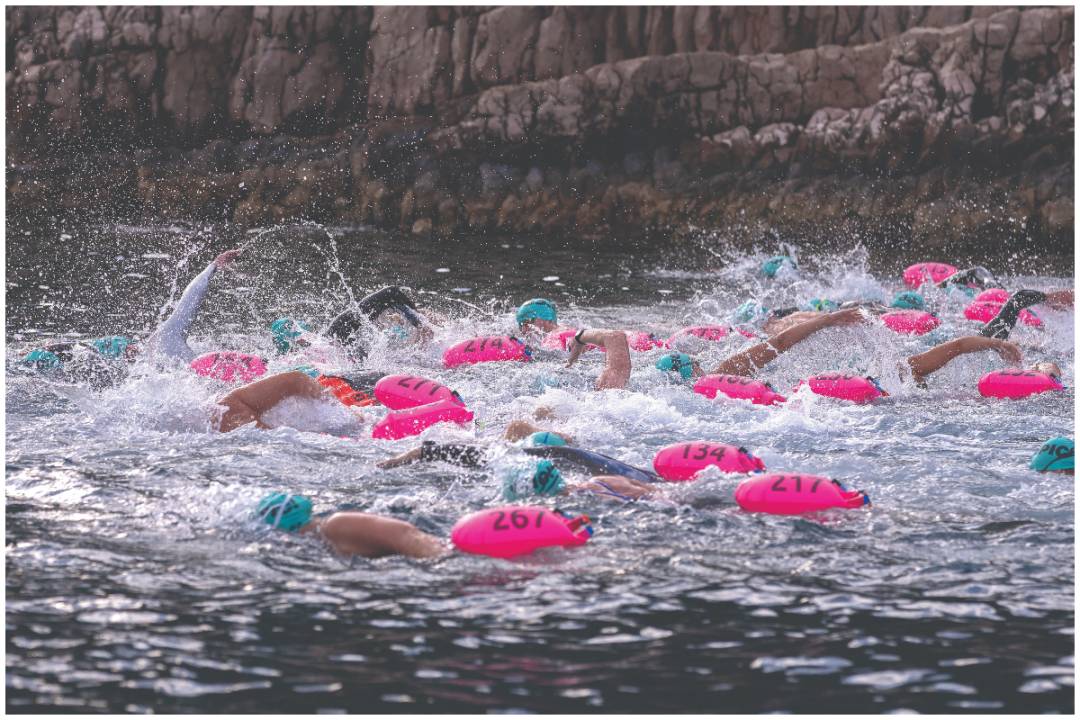
Swapping from the controlled environment of a swimming pool to unpredictable open water challenges all kinds of swimmers.
Two of the most crucial skills to master for a safe and efficient open water experience are breathing and sighting.
This guide will teach you how to perfect both techniques with expert tips from Keri-Anne Payne, an open-water Olympic silver medallist and two-time world champ.
How to breathe while swimming in open water

Effective breathing in open water is about maintaining a steady pattern that provides your body with the oxygen it needs without disrupting your stroke.
Exhale underwater
The most fundamental aspect of efficient swim breathing is to exhale fully and continuously while your face is in the water.
Holding your breath creates tension and a buildup of carbon dioxide, leading to a desperate gasp for air when you turn to breathe.
Practise expelling a steady stream of bubbles from your nose and mouth as soon as your face re-enters the water after an in-breathe.
Bilateral vs unilateral breathing
- Unilateral breathing: Breathing to the same side every two strokes is common, especially in races, as it allows for more frequent oxygen intake.
- Bilateral breathing: Alternating breathing to both the left and right sides, typically every three strokes, is highly recommended for open water swimming
Benefits of bilateral breathing
- It promotes a more symmetrical and balanced stroke, preventing muscle imbalances.
- It allows you to see your surroundings on both sides, which is crucial for navigation and safety.
- In choppy conditions, you can switch to the leeward (sheltered) side to avoid inhaling water.
Finding a breathing pattern
You’ll need to adjust your breathing rhythm to your preferences.
Bilateral breathing every three strokes is a starting point, you may need to tweak this according to your effort level and the conditions.
Some swimmers alternate between breathing every two strokes on one side for a period and then switching to the other, or using a “3-2-3-2” pattern.
The key is to find a rhythm that feels comfortable and sustainable.
How to breathe when swimming in waves

Choppy water can make breathing challenging, so bear these steps in mind.
Rotate more
As you turn to breathe, rotate your body slightly more than you would in a pool. This will lift your mouth higher out of the water.
Look up
Tilt your head slightly upwards as you breathe to create more clearance from the waves.
Quick breaths
Minimise the time your head is turned to the side to reduce the chance of a wave splashing into your mouth.
Stay calm
The open water can sometimes feel overwhelming, leading to anxiety and shortness of breath.
If you start to feel panicked, slow down, focus on fully exhaling underwater, and revert to a comfortable breathing pattern.
What is sighting?

Unlike the black line at the bottom of a pool, open water offers no such guidance.
Sighting is the skill of lifting your head to look forward and ensure you’re swimming in the right direction.
The primary objective of sighting is to swim the straightest and most efficient line possible to your destination, whether it’s a buoy, a landmark on the shore, or the finish line.
Sighting techniques
There are two main ways to sight while swimming in open water. Both are useful skills to have.
“Crocodile Eyes”
This is the more efficient and less disruptive method.
As one arm extends forward, you press down slightly with that hand to lift your head just enough for your eyes to clear the water’s surface.
You take a quick look, and then your head returns to a neutral position as you rotate to breathe to the side.
Full Head Lift
In this technique, you lift your entire head out of the water to look forward.
Payne says: “If you’re struggling to locate the buoy or focus point, do a water-polo stroke whereby you look ahead for one complete arm stroke.
“Do not do this often, though, as it wastes energy and can hurt your back.”
This provides a clearer view but can cause your hips and legs to drop, creating drag and disrupting your rhythm.
This method is best used sparingly, perhaps in very choppy conditions or when you need a longer look to get your bearings.
Choose a fixed landmark
Before you start swimming, identify a large, stationary object on the shore in line with your destination.
Buoys are your primary targets in a race, but having a backup landmark is always a good idea.
Payne says: “Keep your head low to remain as streamlined as possible through the water. As you bring your arm through to complete the stroke, keep that as low as you can, too.
“Look up to sight as your arm is going back into the water.
“Lift your head just enough to focus on the buoy or other focus point ahead, and keep your arm and elbow as low as possible to again remain streamlined.”
Up the frequency in waves
In calm conditions, sighting every 8-10 strokes is often sufficient.
In choppier water or crowded situations, you may need to sight more frequently, perhaps every 4-6 strokes.
The key is to find a balance between staying on course and maintaining a smooth stroke.
Coordinate breathing
A common and efficient method is to sight and then immediately turn your head to the side to breathe in one fluid motion.
Payne adds: “After you’ve located the buoy, in one complete movement turn to the side to breathe. Remember to only breathe in when you turn to the side. Breathe out under the water.”
Practising in the pool

You don’t need to be in open water to practice sighting.
During your pool sessions, pick a spot on the wall at the end of the lane and practise the “crocodile eyes” technique a few times per length.
This will help you get a feel for the movement without the added variables of currents and waves.
By dedicating time to practising these breathing and sighting techniques, you will not only become a more efficient and confident open water swimmer but also enhance your safety and enjoyment of the sport.
Remember to start in calm conditions and gradually build your skills as you become more comfortable with the dynamic environment of open water.


 Keri-anne Payne
Olympic 10k swim silver medallist and swim coach
Keri-anne Payne
Olympic 10k swim silver medallist and swim coach